
Bowing Basement Walls in Ottawa: What Causes Them and How Serious They Are
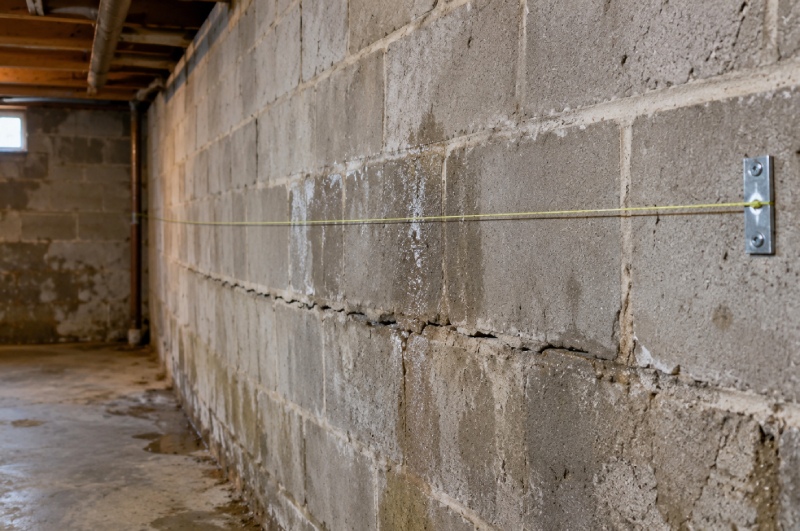
Bowing basement walls in Ottawa usually indicate that a foundation wall is being pushed inward by pressure from the soil and water outside. A bowing basement wall is a foundation wall that has moved inward from its original plane, and its seriousness depends on how far it has moved, whether the movement is active, and what is causing the pressure.
Key Takeaways
- A bowing basement wall is a structural warning sign because the wall has moved inward from its original position.
- Hydrostatic pressure, heavy or poorly drained soil, and seasonal moisture fluctuations can all increase the pressure on a foundation wall.
- Visible bowing should be assessed promptly, but the extent of repair required cannot be determined from crack size alone.
- Many bowing walls can be stabilized without replacing the entire foundation when the cause and extent of movement are identified early.
- Stopping the source of pressure is as important as reinforcing the wall; otherwise, the same forces can continue acting on the foundation.
What a Bowing Wall Actually Looks Like From the Inside and Outside
A bowing wall usually appears as an inward curve, bulge, or lean along part of the basement foundation wall. It may be obvious from across the room, or subtle enough that you first notice a horizontal crack, a shifted joint, or a wall that no longer looks flat when you sight along it.
Common signs of basement issues include horizontal cracking, stair-step cracking in masonry, a ridge or bulge in the wall, or separation near the floor framing. In finished basements, these signs can be hidden, so recurring cracks or changes in trim may be the first visible evidence.
Outside, look for soil sloping toward the house, short downspouts, standing water, or a low area beside the foundation. The visible crack is only part of the story; our guide to foundation cracks explains why the direction of cracks and surrounding movement matter more than simply measuring a single line in the concrete. A proper assessment also checks whether the wall itself is out of plane and whether moisture is exerting external pressure.
Common Causes: Hydrostatic Pressure, Soil Type, and Drainage
The most common forces behind a bowing wall are lateral soil pressure and hydrostatic pressure, often exacerbated by poor drainage. Hydrostatic pressure is the water pressure that builds up in saturated soil; when water cannot drain away efficiently, the saturated soil can push harder against the basement wall.
Soil type matters because different soils hold and release water differently. Ottawa has extensive clay deposits, a fact documented in peer-reviewed geotechnical research on the region’s Leda clay, and The Foundation Experts has worked with local clay-soil conditions and freeze-thaw cycles since 1995. For local context, see Ottawa clay soil and foundation movement.
Drainage is often the controllable part of the equation. Damaged weeping tile, poor grading, short downspouts, or surface water beside the house can leave the soil wetter than it should be. During spring thaw or heavy rain, that extra moisture can increase pressure on a wall already under stress.
This is why reinforcing a wall without determining the source of the pressure can miss the real problem. If water management is part of the cause, the repair plan may also need basement waterproofing or drainage corrections so the wall is not left to carry the same avoidable load.
How Urgent a Bowing Wall Really Is
A bowing wall should be assessed promptly because visible inward movement indicates the wall has lost some of its original alignment. That does not mean every bowing wall is about to fail, but it should not be left unattended indefinitely without knowing the cause.
Urgency increases when the wall is still moving, horizontal cracks are widening, masonry or concrete is displaced, water is entering through new openings, or the top of the wall is shifting relative to the floor framing. A wall that has changed noticeably over one season warrants faster attention than one with a stable, documented condition.
There is no universal rule that tells a homeowner whether a wall is safe based on a photo or a tape measure alone. Wall material, reinforcement, height, outside soil level, drainage, and movement patterns all matter. If you see major new movement or a wall that appears unstable, arrange a professional structural assessment rather than trying to brace or load the wall yourself.
Repair Options for Stabilizing a Bowing Wall
Many bowing walls can be stabilized without replacing the entire foundation, but the right repair depends on the cause, wall type, and the amount of movement. A sound plan addresses both the wall itself and the external conditions that create or contribute to the pressure.
Common approaches include engineered steel reinforcement or bracing, wall-anchor systems, localized rebuilding, or exterior excavation where drainage or waterproofing needs correction. In more advanced cases, part of the wall may need rebuilding rather than reinforcement. The repair should match the failure, not a favourite product.
For homeowners comparing options, our structural repairs in Ottawa service covers structural diagnosis and repair under one scope. We inspect first, explain the cause in writing, and then recommend the smallest repair that properly addresses the problem. If engineering is required, it should be identified in the plan before structural work begins.
The Foundation Experts complete excavation, structural work, masonry, and waterproofing with their own crews, keeping reinforcement and drainage under a single point of accountability, since both are part of the cause.
What Happens if a Bowing Wall Is Left Untreated
If a bowing wall is left untreated, the movement can continue, and the repair can become more extensive. Soil and water pressure do not usually disappear just because the crack has been patched on the inside, so the wall may continue to bend, crack, or open new paths for moisture.
Over time, you may notice wider horizontal cracks, greater inward displacement, recurring leaks, movement at windows or in the framing, or damage to finishes that were repaired before the wall was stabilized. Masonry joints can open, and cracking in poured concrete can become more pronounced.
There is also a practical resale issue. A future inspector or buyer may ask what caused the movement, what corrected it, and whether there is documentation. A diagnosed repair, a written scope, and a transferable warranty are easier to explain than repeated patches with no clear record. Not every bowing wall deteriorates at the same rate, but visible structural change is worth documenting and understanding.
Frequently Asked Questions
Can a bowing wall be fixed without replacing the whole foundation?
Yes. Many bowing walls can be stabilized without replacing the entire foundation when the wall is still suitable for reinforcement, and the underlying pressure can be controlled. Steel reinforcement, engineered anchors, and drainage corrections may all be options. Replacement becomes more likely when movement is severe, materials are badly damaged, or the wall cannot be reliably stabilized in place.
At what point does a bowing wall become dangerous?
A bowing wall becomes dangerous when its stability is compromised, but there is no single visible threshold that applies to every foundation. Rapid movement, major displacement, widening horizontal cracks, loose masonry, or separation at the top or bottom of the wall are signs to seek urgent professional assessment. The safest decision comes from evaluating the wall, soil load, and movement together.
Does insurance ever cover a bowing foundation wall?
Sometimes, but coverage depends on the cause and the wording of your policy. Home insurance is generally designed to cover sudden and accidental insured events, while gradual deterioration or maintenance-related damage may be treated differently. The Insurance Bureau of Canada recommends confirming the specifics with your insurance representative, especially when water or a specific insured event may be involved.
How long does it take to stabilize a bowing wall?
There is no single standard timeline because stabilization can range from focused reinforcement to excavation and partial wall reconstruction. Access, engineering, drainage work, permits, and the extent of movement can all affect the schedule. The Foundation Experts provide the expected scope, cost, and timeline in writing before work begins, so you know what the repair involves.
Conclusion
A bowing basement wall deserves a straight answer, not a quick patch or a worst-case sales pitch. First, identify what is pushing the wall and whether the movement is active; the repair should follow from that diagnosis. That is what we mean when we say we fix the cause, not just the crack.
If you want to know what your wall is telling you, Book Your Free Foundation Assessment and get a written explanation of what we find.